The History of TAHS
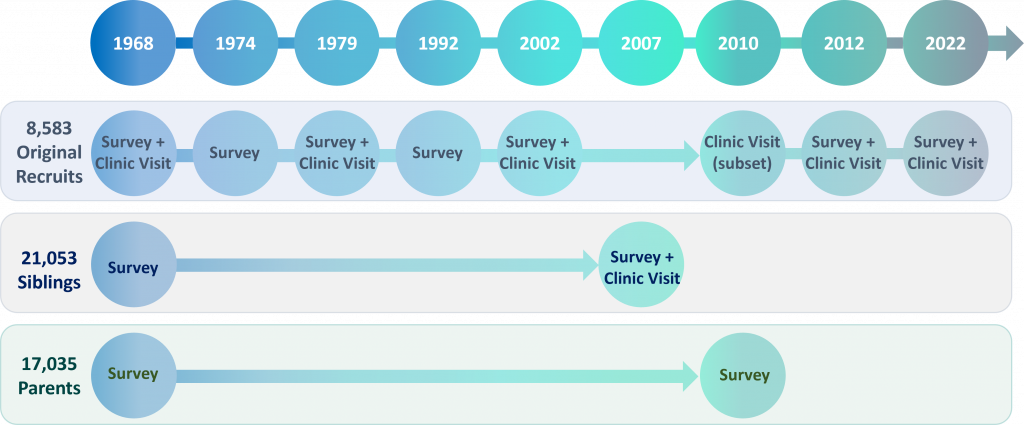
Between 1968 and 2002 there have been 9 time periods of data collection: 8 from our original probands, 2 from siblings and 2 from parents.
Proband follow-up studies
- The Baseline study
- The Proband 1974 study
- The Proband 1979 study
- The Proband 1991 study
- The Proband 2002 study
- The Proband 2010 study
- The Proband 2012 study
Year: 1968
Age: 7
Data collection: Questionnaire and a Laboratory study
Questionnaire completed: 8583 participants
Laboratory study: 8022 participants
Study description:
The original study was designed to look at the prevalence and natural history of childhood asthma. In 1968, the names of all children born in 1961, who were attending school in Tasmania at the time were obtained. A survey relating to the medical history of each child was sent to the parents. 8583 surveys (98.8% of children) were returned. 8022 children (93.5%) also had a medical examination to look at the upper and lower respiratory airways, and a spirometry test.
Year: 1974 (The 2nd decade follow up study)
Age: 12
Data collection: Questionnaire and a laboratory study
Questionnaire completed: 7380 participants
Laboratory study: 837 participants
Study description:
This was the first follow-up study of the original cohort. 7380 children were traced and completed another set of respiratory questionnaires. A small number of children were randomly selected to have a clinic visit if they reported they had symptoms of cough and wheeze in the 1968 and 1974 surveys. Of these children, 837 had a clinical study that included another spirometry test.
Year: 1979 (The 3rd decade follow up study)
Age: 18
Data collection: Questionnaire and a laboratory study
Questionnaire completed: 658 participants
Laboratory study: 218 participants
Study description:
Those that participated in the clinical study in 1974 were invited to have another clinical study. 658 participants completed a brief postal survey, and only 218 continued to do a clinical study, which also included a spirometry test.
Year: 1991-1993 (The 4th decade follow up study)
Age: 30 (average)
Data collection: Questionnaire
Questionnaire completed: 1501 participants
Study description:
This was the third follow-up of the original cohort. 2000 participants were selected based on their asthma status in 1968. Of those invited, 1501 completed a postal questionnaire. A clinical study was not done for this follow-up.
Year: 2002-2008 (The 5th decade follow up study)
Age: 43-45 years
Data collection: Questionnaire and a laboratory study
Questionnaire completed: 5729 participants
Laboratory study: 1405 participants
Study description:
This project was designed to improve our understanding of the history and causes of chronic respiratory diseases (CRDs) in adults using data collected in the past and new data collected at this follow-up.
We traced 7562 (88%) of the original probands. 5729 (78%) of these responded to a postal survey. A subgroup of 2387 participants was invited for a laboratory study, and 1405 (60%) attended our respiratory clinics located in Tasmania, Victoria, NSW, and Queensland.
Year: 2010-2012 (The bronchial hyperresponsiveness study)
Age: 49.6 (average)
Data collection: Laboratory study
Laboratory study: 840 participants
Study description:
Increased airway reactivity (also called Bronchial Hyper-Reactivity, BHR) in middle-age increases the risk of chronic respiratory diseases (CRDs) in old age. This project was designed to improve our understanding of the childhood and adult causes of increased reactivity of the airways in middle-age. This knowledge will help to identify strategies to prevent CRDs in old age. Participants who took part in the 2002 clinical study were invited to undertake another clinical study that included bronchial hyperreactivity (BHR) testing. Of 1405 that were invited, 840 participated in the clinical study. A questionnaire was not done.
Year: 2012-2016 (The 6th decade follow up study)
Age: 52.9 (average)
Data collection: Questionnaire and a laboratory study
Questionnaire completed: 2659 participants
Laboratory study: 2659 participants
Sleep study: 424 participants
Study description:
This was the latest completed study of the TAHS. This follow-up involved lung function testing and questionnaires of all living and traceable probands of the cohort. Valid contact details were available for 6128 participants from the previous follow-up study, and they were invited to the study. Of those who consented to participate, 2659 were involved in the clinical study and completed questionnaires. At this stage, a sleep study and screening questionnaires for sleep apnea were introduced to the study as this condition is common for people above 50 years of age. A small number of 772 participants were randomly selected to have a sleep study, of which 424 agreed to participate.
If you are interested, you can read our cohort profile paper to learn more about the types of data collected for each of the follow-up studies between 1968-2016.
TAHS sibling and parent studies
- The Parents follow-up study
- The Siblings follow-up study
- Mammographic Density Study
Year: 2010-2013
Data collection: Questionnaire
Questionnaire completed: 5111
Study description:
This study surveyed the surviving TAHS parents. This was the only follow-up study of the parents whose children were probands of the 1968 baseline study. 5111 responded to a postal survey done between 2010 and 2013, and this response represents 31.5% of the original parent population.
Year: 2007
Data collection: Questionnaire and a laboratory study
Questionnaire completed: 12073 participants
Laboratory completed: 1659 participants
Study description:
This first and only sibling follow-up commenced in 2007 and involved a postal survey of all traced siblings from the original 1968 cohort (21036) and a clinical study of a sub-sample of participants. 12073 participants completed a postal questionnaire, and a sub-population of 2662 participants were invited to have a clinical study, based on their reported status of asthma or cough in childhood or adulthood. Of those invited, 1801 attended our laboratories in Tasmania, Victoria, Queensland and New South Wales.
Year: 2009-2012
Age: 47-50
Data collection: Questionnaire and a laboratory study
Questionnaire completed: 825 participants
Laboratory completed: 490 participants
Study description:
825 female participants completed a questionnaire, and 490 participants had a mammogram to investigate breast cancer risk among the TAHS cohort.
Researchers and administration
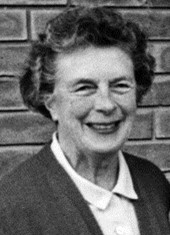
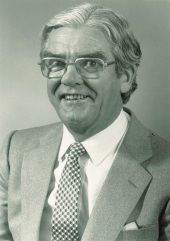
The TAHS was created by Dr Heather Gibson, Dr Bryan Gandevia and Harold Silverstonein in 1968 through the Tasmanian School Medical Service.
Heather Gibson (1919-2005) studied Medicine at the University of Melbourne before she moved to Tasmania. She became instrumental in establishing the School Medical Service in Tasmania. Bryan Gandevia (1925-2006) studied Medicine at the University of Melbourne and became a respiratory physician and medical historian. He joined the team while working in the Department of Respiratory Medicine, University of NSW. Harold Silverstone (1915-1974) graduated in statistics from the University of Otago, New Zealand and University of Edinburgh, United Kingdom. He joined the TAHS team whilst the Reader of Medical Statistics at the Queensland University.
In 1974, the original team was joined by Graham Hall who followed up all 8,500 probands through the Tasmanian School Medical Service and performed lung function testing on a sample of 850 children stratified by their baseline respiratory symptoms.
Graham Giles completed a PhD in 1976-80, which involved analysing data from the TAHS. Management of the TAHS was transferred to the University of Tasmania where Graham Giles joined Norelle Lickiss, Head of Community Medicine, conducted the 1979 follow-up.
When Graham Giles moved to Victoria, the TAHS management shifted to the University of Melbourne. John Hopper and Graham Giles converted all 1968 data onto electronic media in the early 1990s (funded by the Asthma Foundation of Victoria). In 1992 they conducted a survey of 1,500 probands, and then another survey and skin prick testing of 60 asthma rich families in 1996. Mark Jenkins did his PhD using the 1992 study and joined John Hopper to run the 1996 study.
In 2001, John Hopper and Graham Giles handed over leadership of the TAHS to Shyamali Dharmage at the University of Melbourne. She formed a collaboration with Haydn Walters of the University of Tasmania and Michael Abramson of Monash University. Her team computerised the 1974 and 1979 data, the school medical records of 8,500 probands and the birth records of ~3,000 probands. They went to work tracing all 45,900 probands, parents and siblings who participated in the original survey.
Since 2001 the TAHS has been awarded over $20 million in research funds from grants, fellowships and scholarships. Over 30 Honours/Master’s students, 17 PhD students and 10 postdoctoral research fellows have completed their research within TAHS. There are currently 11 PhD students utilising TAHS data for their research.